Something quietly significant happened on British roads last year. Whilst motoring journalists were still debating whether Chinese electric vehicles could ever be taken seriously in Europe, real buyers, ordinary people in Swindon, Sheffield, and Surrey, were already signing on the dotted line for BYDs, NIOs, and MGs. Not out of novelty, and not because they couldn’t afford anything else. They chose them instead of a Tesla.
Tesla’s Reputation Problem Is Very Much a British Problem
A recent survey covered by EVMagz found that Elon Musk’s increasingly polarising public persona is actively turning UK consumers away from Tesla. This isn’t simply brand scepticism, it’s a measurable commercial consequence. In a market where EVs remain a considered, emotionally loaded purchase, the person behind the badge matters more than it ever did with a Ford or a Vauxhall.
Tesla’s quality control issues haven’t helped either. Panel gaps, software glitches requiring over-the-air patches, and a customer service infrastructure that many owners describe as impersonal have eroded the premium perception the brand once commanded. When a Model 3 cost £40,000 and felt like the future, buyers forgave the rough edges. Now that Chinese alternatives are arriving at similar or lower price points with noticeably tighter build quality, the calculus has shifted.
What BYD and NIO Are Actually Offering (It’s More Than Just a Lower Sticker Price)
The lazy assumption is that Chinese EVs win purely on price. That’s only part of the story. Yes, the BYD Seal undercuts the Tesla Model 3 by several thousand pounds in equivalent trim. However the conversation among owners tends to focus on what you get for that money rather than what you save.
Consider what BYD’s UK line-up brings to the table right now:
- Blade Battery technology: BYD’s lithium iron phosphate cells offer better thermal stability and a longer cycle life than the NMC chemistry used in many Western competitors.
- 6-year/150,000-mile battery warranty: a figure that makes Tesla’s 8-year/150,000-mile warranty look comparable on paper, but BYD’s is offered as standard across the range without the small print caveats.
- Rotating centre screens and ambient lighting: interior technology that feels genuinely considered rather than bolted on as a selling point.
- Vehicle-to-load (V2L) capability: allowing owners to power appliances from the car’s battery, something Tesla still hasn’t implemented across its mainstream range.
- NIO’s battery-swap network: a fundamentally different approach to charging anxiety, with swap stations that exchange a depleted battery for a fully charged one in under five minutes.
NIO occupies a different segment. Its ET5 saloon and ET7 are positioned squarely against BMW and Mercedes, and its UK buyers tend to be former premium German car drivers rather than defecting Tesla owners. The brand’s Battery as a Service (BaaS) subscription model separates the cost of the battery from the vehicle purchase, reducing the upfront price considerably and removing long-term degradation anxiety at a stroke.
MG’s Quiet Domination of the Affordable End
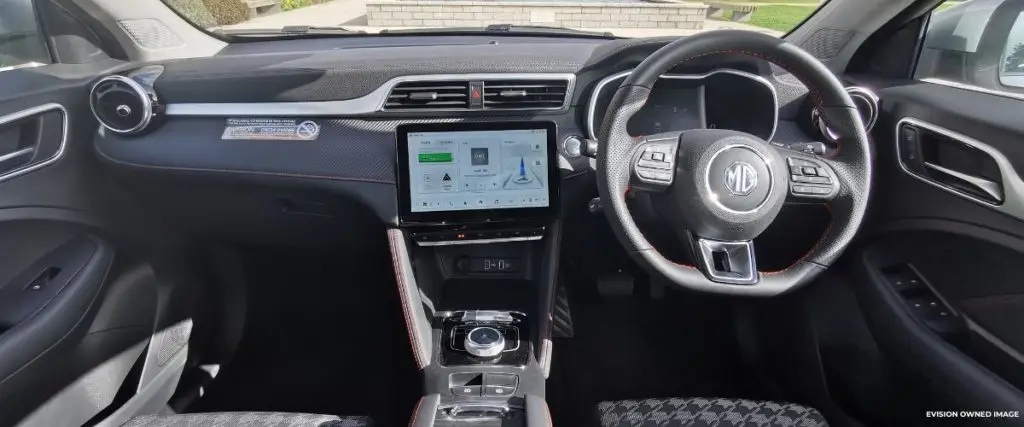
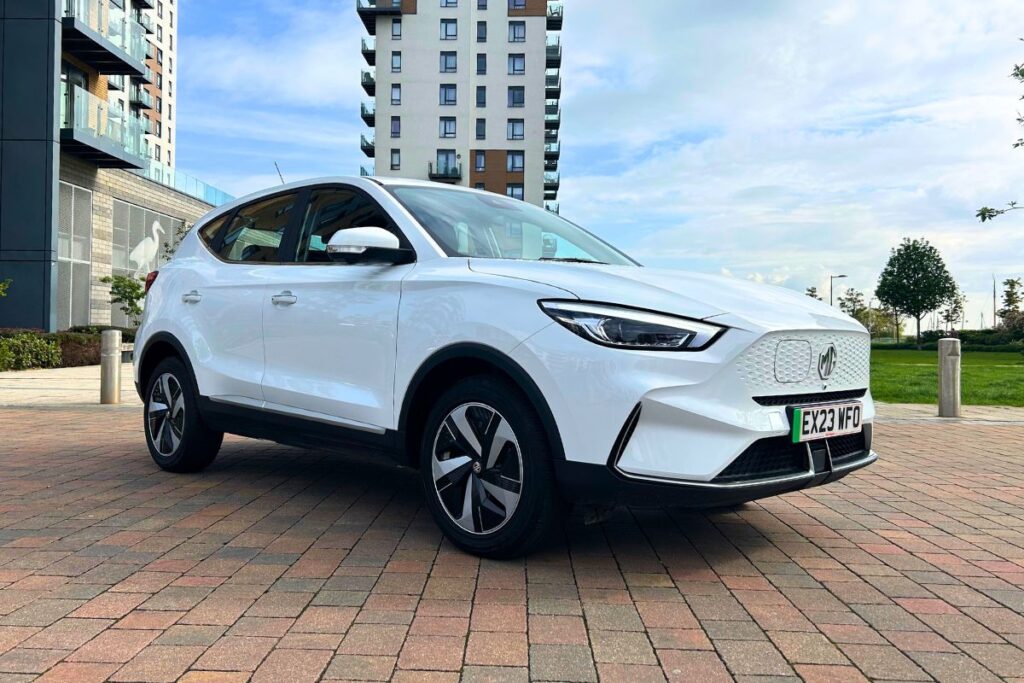
Before BYD and NIO arrived with their sharper marketing and premium aspirations, MG, now owned by Chinese conglomerate SAIC, had already been doing the unglamorous work of normalising Chinese EVs in Britain. The MG4 became one of the best-selling electric cars in the UK not through hype, but through honest competence: a 250-mile real-world range, a genuinely driver-focused chassis, and a price that made Renault and Volkswagen’s equivalents look overpriced by comparison.
The MG badge carries decades of British heritage. Abingdon, Le Mans, Paddy Hopkirk and SAIC, has been shrewd enough not to erase that. Owners who personalise their cars with private plates from specialists like Number1Plates are making the same statement they always have: that this car is theirs, with an identity that transcends its manufacturer. The fact that a Chinese-owned brand now inspires that kind of ownership pride in Britain is, in its own quiet way, remarkable.
The Tariff Question: Could European Trade Policy Change the Picture?
It would be dishonest to discuss Chinese EVs in Britain without acknowledging the geopolitical headwinds. The European Union imposed significant tariffs on Chinese-built electric vehicles in late 2024, citing state subsidies that it argued distorted fair competition. The UK, post-Brexit, has so far not followed suit with equivalent measures, a divergence that has made Britain one of the most accessible markets in the Western world for Chinese automotive brands.
That window may not remain open indefinitely. Pressure from domestic manufacturers, Jaguar Land Rover chief among them, and from traditional European partners could prompt Westminster to revisit the question. If tariffs do arrive, the price advantage currently enjoyed by BYD, NIO, and others would narrow, and the conversation would shift back to value engineering rather than outright affordability.
For now, though, UK buyers are the beneficiaries of that open door. And crucially, the Chinese brands know it. Which is why they are investing heavily in UK dealer networks, right-hand-drive development, and customer support infrastructure designed specifically for British expectations.
What Tesla Needs to Do and Whether They Will Bother
Tesla is not going anywhere. Its Supercharger network remains the best public charging infrastructure in Britain by a considerable margin, and the Model Y’s practicality as a family car is still largely unmatched at its price point. Range figures, software maturity, and over-the-air update capability are genuine strengths that Chinese rivals are still working to equal.
But Tesla’s complacency about customer experience. The closed showrooms replaced by app interactions, the service centres stretched beyond capacity, and the unresponsive aftersales is a structural problem that a refreshed Model 3 doesn’t fix. And the brand’s association with its CEO, whether you consider that association fair or not, is now a commercial liability in the UK in a way it simply wasn’t three years ago.
The Chinese electric vehicles now entering the UK market aren’t perfect. Software ecosystems are still maturing, dealer network coverage outside major cities is patchy, and resale values remain an unknown quantity. But the rate of improvement is striking, and the appetite among British drivers for an alternative is real. The market share numbers already reflect that. Where they go from here depends not just on product, but on trust. And trust, once lost, is considerably harder to rebuild than a panel gap.
Looking To Buy An Electric Vehicle? Hire One First!
If you are weighing up these shifting choices, there is a simple way to cut through the noise. At EVision Electric Vehicles, a fleet of over 2,000 vehicles are available to hire across the UK, giving you the chance to experience different EVs in real world conditions before committing. Whether you are curious about the increasingly popular MG range, keen to explore what newer Chinese brands bring to the table, or still want to get behind the wheel of a Tesla to make your own comparison, we have options to suit.

Hiring first allows you to move beyond headlines and opinions, and decide what actually works for your driving, your budget, and your expectations.
Contact us today, or book your electric vehicle on the website.
All information correct as of: 8th April 2026.
Guest Article by Johnny Hernandez