For many UK drivers, the cost of running a car has become a much bigger consideration than it once was. Fuel prices can change significantly in a relatively short space of time. Making it increasingly difficult to predict how much you will spend simply getting to work, visiting family or going about your daily routine. With petrol and diesel prices continuing to put pressure on household budgets, more motorists are starting to look at alternative ways of getting around.
Recent rises have once again brought the issue of fuel costs into the spotlight. In September 2026, average UK pump prices climbed rapidly, with diesel approaching its previous record and petrol also seeing significant increases. RAC data reported in mid September put average diesel at 193.85p per litre and unleaded at 171.27p per litre. With both having risen by around 10p since the beginning of the month.
That is a sizable increase when you consider how often the average driver needs to fill up. For anyone covering a substantial number of miles each week, even a small increase per litre can quickly turn into hundreds of pounds over the course of a year. So, if you are feeling the pinch every time you visit the petrol station. Could switching to an electric vehicle actually make a noticeable difference to your motoring costs?
Why Are Fuel Prices Rising?
Petrol and diesel prices are influenced by several different factors. These include the wholesale price of crude oil, global supply and demand, exchange rates, taxation and events affecting international energy markets. This means that prices at the pumps can move considerably even when your own driving habits have not changed.
The recent increases have been particularly noticeable. According to RAC figures reported in September, diesel prices were only around 5p per litre below the UK’s previous all time high of 199p. Which was recorded in 2022.
For drivers, the frustrating part is that many of these factors are outside their control. You can drive the same car, cover the same distance and make the same journeys every week. Yet your monthly motoring costs can suddenly increase simply because the price of fuel has risen.
How Quickly Can Fuel Costs Add Up?
Consider a vehicle with a 50 litre fuel tank. At 193.85p per litre, filling that tank with diesel would cost approximately £96.93. If you were doing enough mileage to require four full tanks in a month, you would be spending close to £388 on fuel alone.
Not every driver will use that much fuel, of course. However, the example demonstrates just how quickly higher pump prices can add up. For households already managing rising living costs, an unexpected increase in fuel expenditure can make a noticeable difference to the monthly budget.
This is one of the reasons electric vehicles are attracting more attention from motorists looking for ways to reduce their running costs.
Electric Cars Are Not Affected by Petrol and Diesel Prices
One of the most obvious financial advantages of driving an electric vehicle is also one of the simplest. You are no longer buying petrol or diesel.
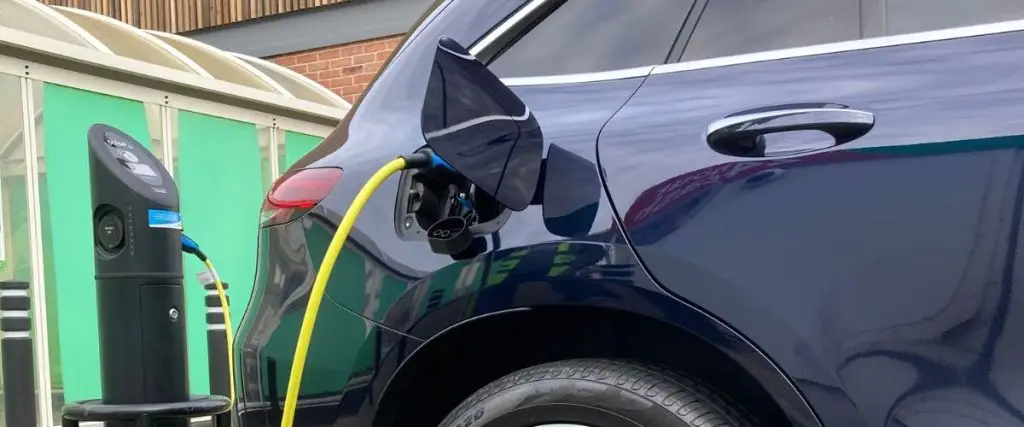
Instead, your vehicle uses electricity. Meaning your energy costs are determined by the price you pay for charging rather than the price displayed on a petrol station forecourt. Electricity is not free, of course, and charging an EV still comes with a cost. However, drivers who can charge at home, particularly using an off peak electricity tariff, may be able to reduce the amount they spend on energy considerably.
It was previously stated that charging a medium sized electric vehicle at home can work out at around 8p per mile. In comparison to roughly 13p to 17p per mile for petrol or diesel fuel based on January 2024 figures. Some specialist overnight tariffs can also offer considerably cheaper electricity during certain periods.
It has also been highlighted that the potential savings available through off peak charging, with some tariffs starting at around 8p per kWh as of April 2026.
These figures are examples rather than a guarantee of what every EV driver will pay. Electricity prices vary between suppliers and tariffs, while different electric vehicles have different levels of efficiency. Your charging habits will also make a difference.
The basic principle remains, however. If you can charge an EV at home using relatively inexpensive electricity, the cost per mile can be significantly lower than buying petrol or diesel.
What Could That Mean Over A Year?
It is easier to understand the potential savings when you look at an entire year rather than the cost of a single journey.
Imagine you drive 10,000 miles each year. If your petrol or diesel vehicle costs around 15p per mile in fuel, you would spend approximately £1,500 on fuel over the course of the year. If an electric vehicle cost around 8p per mile to charge at home, the same 10,000 miles would cost approximately £800 in electricity.
That represents a potential difference of around £700 a year.
Your actual savings could be higher or lower depending on your vehicle, mileage and charging arrangements. Someone using a particularly efficient EV and benefiting from a low overnight electricity tariff could potentially spend less. While a driver who relies heavily on more expensive public rapid charging could see a smaller difference.
Consider Your Own Driving Habits
This is why it is important to look at your own circumstances rather than assuming that every electric vehicle will deliver exactly the same savings.
If you drive a high mileage every year, even a relatively small saving per mile can become significant. Someone who only drives a few thousand miles annually may see a smaller difference in absolute terms. While a commuter covering long distances could potentially benefit much more.
Maintenance Could Provide Another Saving
Fuel is only one part of the cost of owning and running a car. Maintenance, servicing, repairs, insurance and depreciation can all have a significant impact on your overall motoring budget.
Traditional petrol and diesel cars have complex engines containing numerous moving components. They require regular servicing. Plus, components such as clutches, exhaust systems and other mechanical parts may need to be repaired or replaced.
Electric vehicles still require maintenance. They have tyres, brakes, suspension, steering systems and other components that need regular attention, while the battery and electrical systems are also important parts of the vehicle.
However, an EV has fewer moving mechanical components than a conventional combustion engine vehicle. This can mean there are fewer engine related maintenance requirements over the lifetime of the vehicle.
Regenerative Braking
Another feature worth considering is regenerative braking. Electric vehicles can recover some energy when slowing down, using the electric motor to help recharge the battery.
Regenerative braking can also reduce the amount of work required from the conventional friction brakes in certain driving conditions. This can potentially help extend the life of brake components, although actual wear will depend on the vehicle and how it is driven.
Exactly how much you save on maintenance will depend on the make and model you choose, how much you drive and how well the vehicle is maintained. Nevertheless, reduced routine mechanical maintenance is another factor worth considering when comparing the overall cost of electric and petrol or diesel motoring.
Public Charging Versus Charging At Home
One of the biggest questions for anyone considering an EV is where they will charge it. If you have access to a home charger, an electric vehicle can be particularly attractive from a running cost perspective. You can plug the car in when you arrive home and allow it to charge overnight. Meaning you can often start the following day with enough energy for your regular journeys.
There is also a convenience factor. Rather than making a separate trip to a petrol station every time your tank gets low, you can simply connect your car when you get home and let it charge while you sleep.
Public charging is a little different. Prices vary considerably between operators and different types of chargers. With rapid and ultra rapid charging often costing more than charging at home.
The UK Government’s EV guidance has previously noted that public charging can be closer in price to fuelling an equivalent petrol vehicle, which highlights why access to cheaper home charging can make such a significant difference to the overall economics of electric motoring.
What If You Cannot Charge At Home?
Not having a driveway or private parking does not necessarily mean an EV is unsuitable. The UK’s public charging network continues to expand. Many drivers successfully rely on public chargers for some or all of their charging.
However, it is worth researching the charging points around your home, workplace and the destinations you regularly visit. Check the costs as well as the availability, as two charging locations offering similar speeds can have very different prices.
If you regularly make long journeys, it is also worth considering where you would stop to recharge. Modern EVs can travel considerable distances between charges, but planning longer journeys around charging stops can still be part of adapting to electric motoring.
You Do Not Necessarily Have To Buy An EV
There is another option for anyone interested in electric vehicles but not quite ready to purchase one. Hiring an EV can give you the opportunity to experience electric driving without immediately committing to buying a new vehicle or taking out a finance agreement.
This can be particularly useful if you want to understand how an electric car would fit into your everyday routine. Rather than simply taking a short test drive, hiring an EV gives you the chance to use one on your normal commute, shopping trips, school runs and longer journeys.
EVision offers electric vehicle hire across the UK, with a wide selection of models available. The range includes practical everyday vehicles, larger SUVs and premium electric cars, giving drivers the opportunity to experience different types of EV depending on their requirements.
Try Before You Commit
EVision also provides longer term hire options, allowing drivers to experience electric motoring for more than just a traditional weekend rental. This could be particularly useful if you are seriously considering an EV but want to spend some time living with one before making a long term decision.
Hiring an EV can also give you a much clearer picture of your potential running costs. You can keep track of how much you spend on charging, compare this with what you would normally spend on petrol or diesel and see whether the difference works for your circumstances.
You may discover that you enjoy the quieter driving experience, appreciate being able to charge overnight or find that the reduced energy cost makes a noticeable difference to your monthly budget. Alternatively, you might discover that an EV does not quite suit your current circumstances. Either way, hiring gives you useful real world experience before making a larger financial commitment.
Could Now Be The Time To Try Electric?
With petrol and diesel prices becoming increasingly difficult to predict, it makes sense for motorists to take a closer look at how much their vehicles really cost to run. Fuel is one of the largest regular expenses associated with driving, and unlike many other costs, the price can change quickly.
Electric vehicles cannot eliminate every motoring expense, but they can change one of the biggest ones: the cost of energy. Ultimately, the most useful comparison is the one based on your own driving. Look at how many miles you cover each year, how much fuel your current vehicle uses, what you currently pay at the pump and whether you have access to affordable home charging.
If you are still unsure whether an electric vehicle would work for you, hiring one could be a straightforward way to find out. You can experience electric driving for yourself, test the charging routine and monitor how much you spend on electricity without immediately committing to purchasing an EV.
With fuel prices putting increasing pressure on household budgets, it may be worth asking a different question the next time you pull into a petrol station. Instead of simply asking, “How much will my next tank cost?”, it might be time to ask, “How much could I save by not needing one?”
Don’t forget to follow us on social media to stay up to date with the latest EV news and special offers:
Facebook: https://www.facebook.com/EVisionEVs/
X: https://twitter.com/EVisionEVs
Instagram: https://www.instagram.com/evisionevs
TikTok: https://www.tiktok.com/@evisionelectricvehicles
LinkedIn: https://www.linkedin.com/company/evision-electric-vehicles
All information correct as of: 6th October 2026.