


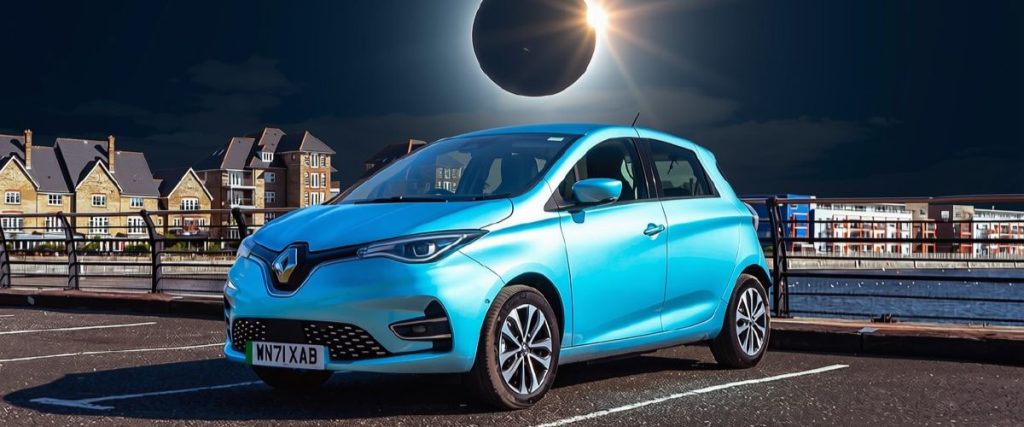
On Wednesday 12th August 2026, the UK will experience one of the most impressive solar eclipses visible from Britain in decades. As the Moon passes between the Earth and the Sun, a large proportion of the Sun will temporarily be obscured, creating a spectacular sight across the country.
But the eclipse isn’t just an exciting event for astronomy enthusiasts. It could also have an interesting effect on the UK’s electricity system, particularly for electric vehicle (EV) drivers.
Solar power has become an increasingly important part of Britain’s energy mix, and the temporary reduction in sunlight during the eclipse means that solar generation will fall. With more electric vehicles on UK roads and more drivers relying on public and home charging, this raises an interesting question: could the 2026 solar eclipse affect EV charging?
The short answer is that most EV drivers shouldn’t have anything to worry about. However, the eclipse provides a useful reminder of why planning your EV journey and understanding charging requirements can make EV travel easier and more convenient.
What Happens to Solar Power During a Solar Eclipse?
Solar panels generate electricity by converting sunlight into electrical energy. Naturally, when less sunlight reaches a solar panel, less electricity can be generated.
During the eclipse, the Moon will temporarily block a significant proportion of the Sun. In some parts of the UK, around 90 – 96% of the Sun is expected to be obscured at the peak of the eclipse, although the exact level varies depending on location.
Because solar generation is affected by the amount of sunlight available, electricity generated by solar farms and rooftop solar installations will temporarily decrease.
The impact is expected to be particularly noticeable across Great Britain. Current forecasts indicate that the eclipse could reduce solar generation by as much as around 1,100 megawatts (MW). The National Energy System Operator (NESO) has taken measures to prepare for the reduction and has asked energy market participants to provide additional generation capacity.
This doesn’t mean the UK electricity grid will simply stop working. The electricity system is designed to balance supply and demand. The eclipse is a predictable event that can be planned for.
However, it does mean that the country could temporarily have less solar-generated electricity available during the evening.
Could the Eclipse Affect EV Charging?
Potentially, but probably not in a way most EV drivers will notice.
Public EV charging stations are connected to the electricity grid. Rather than relying directly on sunlight at the exact moment you plug your vehicle in.
This means that even though solar generation decreases during the eclipse, your EV charger can continue drawing electricity from the grid.
The bigger consideration is the overall balance between electricity generation and demand.
As the number of electric vehicles in the UK continues to increase, more electricity is required to charge them. If many drivers choose to charge their cars at exactly the same time that solar generation is falling, this can add to demand during an already important period for the electricity system.
For this reason, EV drivers may want to think carefully about when they charge rather than simply whether they charge.
Should You Charge Your EV Before the Eclipse?
If you’re planning a journey around the time of the eclipse, charging your EV earlier in the day could be a sensible option.
The eclipse is expected to take place during the evening. Meaning solar generation would already naturally be declining as daylight fades. The temporary reduction caused by the eclipse will accelerate that decline.
Charging your vehicle earlier gives you one less thing to worry about when you’re trying to enjoy the event or travel during the evening. For example, if you have an EV with a relatively low state of charge and you’re planning a longer journey, consider charging before the eclipse begins.
You don’t necessarily need to charge your vehicle to 100%. Depending on your journey, a suitable level of charge may be more than enough.
The important thing is to avoid leaving your charging plans until the last minute if you know you’ll need a significant amount of energy.
What About Public EV Charging Stations?
Public charging stations should continue operating during the eclipse. However, if you’re planning a longer journey, it is always sensible to think ahead about where you can charge.
This is particularly important if you’re travelling to a popular destination to watch the eclipse. Increased traffic, tourism and demand for charging could mean that some charging locations are busier than usual. Rather than arriving at a charger with only a few miles of range remaining, consider identifying potential charging stops in advance.
It’s also worth remembering that charging speeds vary considerably between vehicles and charging points. A rapid or ultra-rapid charger can replenish a significant amount of range relatively quickly. While slower AC chargers may require considerably longer.
If you’re hiring an EV for the eclipse, familiarise yourself with the vehicle’s charging capabilities before setting off.
Do Electric Cars Cost More to Run on Long Journeys?
Although charging costs vary, electric vehicles can often be cheaper to run than traditional petrol or diesel cars. Many drivers benefit from lower energy costs, reduced servicing requirements and fewer moving parts that need maintenance.
Long journeys can also be more affordable when you take advantage of home charging before setting off. Starting with a full battery can reduce your reliance on more expensive public charging options.
For drivers who regularly travel long distances, choosing the right EV model is important. Factors such as battery capacity, charging speed and comfort should all be considered alongside your budget and lifestyle.
It’s also worth remembering that charging speeds vary considerably between vehicles and charging points. A rapid or ultra-rapid charger can replenish a significant amount of range relatively quickly, while slower AC chargers may require considerably longer.
If you’re hiring an EV for the eclipse, familiarise yourself with the vehicle’s charging capabilities before setting off.
Hiring an EV for the 2026 Solar Eclipse
If you’re considering hiring an electric vehicle for a day trip, weekend away or longer journey around the eclipse, the event could be a great opportunity to experience electric driving for yourself.
Hiring an EV means you can choose a vehicle that suits your particular journey without committing to ownership.
Whether you need a practical family car, a premium electric saloon, a high-performance model or an electric van, choosing the right vehicle can make your journey considerably more enjoyable.
Before collecting your hire vehicle, it’s worth checking:
- The vehicle’s estimated driving range.
- How the vehicle is charged.
- Which charging connector it uses.
- How quickly it can charge.
- Where you intend to stop and recharge.
- Whether your accommodation has EV charging facilities.
- How much range you’ll need for your return journey.
Planning these details in advance can help ensure that the eclipse is memorable for the right reasons.
Best Places in the UK to View the 2026 Solar Eclipse
If you’re planning to hire an electric vehicle and head out to watch the solar eclipse, choosing the right viewing location could make all the difference.
Because the eclipse will take place in the evening, the Sun will be relatively low in the western sky. This means that finding somewhere with a clear, unobstructed view towards the west is particularly important. Hills, tall buildings, trees and other obstacles could potentially block your view during the most impressive part of the eclipse.
Here are some of the best areas to consider for your eclipse road trip.
Cornwall
Cornwall is one of the best places in the UK to experience the 2026 eclipse. The county’s dramatic coastline also provides plenty of opportunities to find an elevated location with a clear western horizon. Areas around the western tip of Cornwall could be particularly appealing for those combining eclipse viewing with a scenic EV road trip.
Pembrokeshire, Wales
Pembrokeshire is another excellent option. The county’s coastline offers numerous open viewpoints, while the combination of beaches, cliffs and countryside makes it an attractive destination for an EV day trip or longer break.
Plymouth and Devon
The south-west of England is generally one of the strongest areas for eclipse coverage. For EV drivers, Devon also offers plenty of opportunities to combine the eclipse with a scenic road trip. However, allow additional time for potentially busy roads and popular viewing areas.
London and the South-East
You don’t necessarily need to travel across the country to experience the eclipse. If you’re staying in London, elevated parks and open spaces with an unobstructed western view could provide good opportunities for viewing. Locations such as Parliament Hill and Primrose Hill have been highlighted as potential viewpoints because of their elevated positions and open horizons.
Why Hire an EV from EVision?
If you’re looking to experience electric driving around the 2026 solar eclipse, EVision Electric Vehicles can provide a wide range of options.
We are the UK’s first and largest pure electric vehicle rental company, with a fleet of more than 2,000 vehicles. Our range includes models from manufacturers such as Tesla, BMW, Audi, Hyundai, Volkswagen, Jaguar, Polestar and Porsche, alongside a selection of electric vans and pickup trucks.
With both short- and long-term electric vehicle hire and nationwide delivery available, we’ve got you covered.
View our range of available electric vehicles for hire in the UK and get in touch with us to book.
All information correct as of: 12th August 2026.