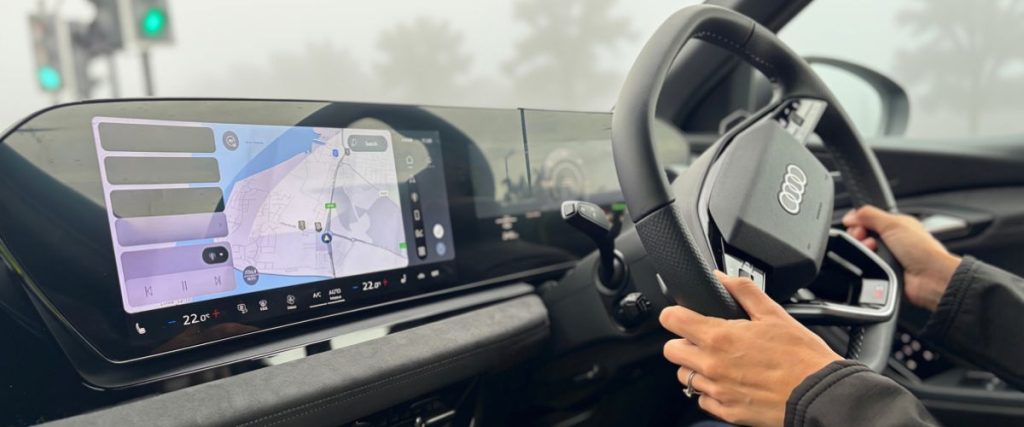
Driving in fog can quickly turn a routine morning commute or a long-distance business journey into a stressful experience. The thick, grey wall of mist reduces visibility, distorts spatial awareness, and makes judging distances notoriously tricky. Whether you manage a fleet of vehicles or drive daily for business and personal travel, staying safe on the road requires a shift in habits the moment atmospheric conditions deteriorate.
Navigating reduced visibility safely is all about patient control, correct vehicle settings, and clear decision-making. Here are five common mistakes worth discussing with your drivers to ensure everyone stays protected on the road.
Following the Rear Lights Ahead
When dense mist rolls in, keeping another vehicle’s tail lights in sight can feel immensely reassuring. Naturally, our eyes search for visual anchors in poor conditions. However, relying on the vehicle in front is one of the most frequent hazards of driving in fog.
Fixating on tail lights often tricks drivers into following too closely or matching an unsafe speed set by someone else who may also be struggling to see. If the lead driver makes a mistake, misjudges a bend, or brakes abruptly, a multi-vehicle collision can happen in a split second.
The safest approach is to leave a significantly bigger gap and choose your own independent speed. You should always be able to stop comfortably within the stretch of road you can clearly see ahead. In severe fog, visibility can often drop to less than 30 metres.
At this visibility distance, travelling at 50 mph means you have just over one second of vision in front of your vehicle. When you consider that at 50 mph, a driver will travel roughly 15 metres just during their initial reaction time before even applying the brakes, the safety margin disappears almost entirely. Leaving ample space is your primary defense against sudden stops.
Using Full Beam
It seems logical to turn your lights up to maximum power when the road becomes dark and hazy, but using full-beam headlights in foggy conditions is counterproductive.
High beams shoot light straight into the water droplets suspended in the air. Instead of cutting through the mist, the bright light reflects straight back into your eyes, creating a blinding white glare that actually reduces your visual range even further.
When driving in fog, always use dipped headlights alongside your windscreen wipers and demisters. Dipped beams angle light downwards onto the road surface beneath the fog layer, illuminating lane markings and obstacles without causing harsh glare or blinding oncoming motorists.
Using Fog Lights Incorrectly
Knowing exactly when to operate your vehicle’s specialised lighting is essential for road safety. According to the UK GOV.UK Highway Code Rule 226, drivers must switch on their headlights when visibility is seriously reduced, generally defined as when you cannot see further than 100 metres (328 feet), roughly the length of a standard football pitch.
Front or rear fog lights may also be used under these specific low-visibility conditions to help make your vehicle identifiable to surrounding traffic.
However, Highway Code Rule 236 strictly states that fog lights must be switched off as soon as visibility improves. Leaving fog lights active when conditions clear is not only against the law, but high-intensity rear fog lamps can dazzle drivers behind you and make your brake lights much harder to distinguish.
Accelerating as Soon as the Fog Clears
Fog is rarely uniform; it drifts across fields, dips into valleys, and lingers around coastal areas. A brief stretch of clear road can easily lure drivers into a false sense of security, prompting them to press down on the accelerator and return to national speed limits.
Accelerating too quickly is a risk because fog is naturally patchy. A bright, clear section of highway can lead straight into another thick, dense fog bank without warning. Always build speed cautiously and continuously assess the road ahead.
Additionally, if another motorist behind you is tailgating or following too closely, resist the temptation to accelerate beyond a safe speed. Maintain a steady pace, keep your distance from the vehicle ahead, and allow impatient drivers to pass safely when an opportunity arises.
Drive Safely in All Conditions
Navigating hazardous weather requires patience, concentration, and a well-maintained vehicle equipped with responsive lighting and clear visibility controls. Modern electric vehicles offer precise throttle control, advanced climate control demisting systems, and driver-assistance features that help maintain composure during winter journeys.
If you are looking to upgrade your fleet or hire a modern electric vehicle designed for comfort and performance in all weather conditions, explore over 2000 vehicles available at EVision Electric Vehicles.
Don’t forget to follow us on social media to stay up to date with the latest EV news and special offers:
Facebook: https://www.facebook.com/EVisionEVs/
X: https://twitter.com/EVisionEVs
Instagram: https://www.instagram.com/evisionevs
TikTok: https://www.tiktok.com/@evisionelectricvehicles
LinkedIn: https://www.linkedin.com/company/evision-electric-vehicles
All information correct as of: 9th November 2026.