


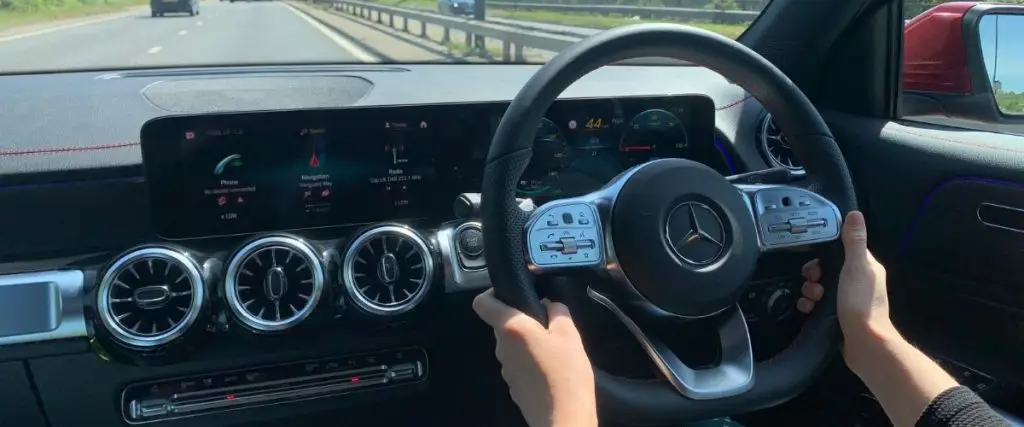
If you have recently made the switch to an electric vehicle, you may have noticed something interesting when heading out onto the motorway: the battery percentage can seem to disappear a little faster than it does around town.
So, does motorway driving reduce EV range? Yes, generally speaking, driving at motorway speeds will use more energy and can reduce the distance you can travel on a single charge. However, that does not mean motorway journeys are a problem for electric vehicles. Far from it. Modern EVs are increasingly capable of covering long distances, and with a little planning, motorway driving can be just as straightforward as it is in a petrol or diesel car.
At EVision Electric Vehicles, we know that range is one of the biggest questions people have when considering an EV, particularly when it comes to longer journeys. So, let’s look at why motorway driving affects range, how you can make your battery go further and what to do if you need to stop and charge.
Why Does Motorway Driving Use More EV Range?
The simple answer is speed. An electric vehicle is generally at its most efficient at lower and moderate speeds. As you increase your speed, the amount of energy required to overcome aerodynamic drag rises significantly.
Your EV has to push through the air as it travels. At 30 or 40mph, the resistance is relatively modest. At 70mph, the car is travelling through considerably more air, and the energy required to maintain that speed increases. This is not unique to electric cars. Petrol and diesel vehicles also use more fuel at higher speeds. The difference with an EV is that you can see the effect directly through your estimated range and battery percentage.
There are other factors at play, too. Cold weather can affect battery efficiency, while heating the cabin can increase energy consumption. Strong headwinds, heavy loads, roof boxes, low tyre pressures and spirited acceleration can all have an impact.
The result is that your EV’s official WLTP range should not be interpreted as a guaranteed motorway range. WLTP figures are designed to provide a standardised comparison between vehicles, rather than predict exactly how far you will travel in every real-world situation.
How Much Range Will You Lose on the Motorway?
There is no single figure that applies to every electric vehicle. A large, aerodynamic EV with a sizeable battery may cope very well with motorway driving, while a smaller model with a relatively compact battery may need more frequent stops.
Your speed also matters. Driving consistently at 70mph will generally use more energy than travelling at 60mph. That does not mean you need to crawl along the motorway, but a modest reduction in speed can make a noticeable difference over a long journey.
Top Tips for Reducing EV Range Usage on the Motorway
The good news is that there are several easy ways to improve efficiency.
Watch your Speed
This is probably the biggest factor you can control. If your journey allows it, reducing your motorway speed slightly can help your EV use less energy. Maintaining a steady speed is also preferable to repeated bursts of acceleration and braking.
Use Cruise Control Where Appropriate
Adaptive cruise control can be particularly useful on longer motorway journeys. Maintaining a consistent speed can help avoid unnecessary acceleration and deceleration. Of course, you should always remain alert and ready to take control when necessary.
Check your Tyres
Correct tyre pressures are important for any vehicle, but they are particularly useful when trying to maximise EV efficiency. Before a long journey, check your tyre pressures against the manufacturer’s recommended figures. If your tyres are significantly underinflated, rolling resistance increases and your vehicle may use more energy.
Avoid Carrying Unnecessary Weight
That forgotten box of tools in the boot might not seem like much, but every extra kilogram requires energy to move. Before a long trip, clear out anything you don’t need.
Be Mindful of Heating and Air Conditioning
You do not need to sit in an uncomfortable car just to save a few miles of range. However, using climate control sensibly can help. If your EV has battery pre-conditioning, using it while the vehicle is still connected to a charger can also be beneficial, particularly in colder weather.
Plan Around the Weather
A strong headwind can have a surprisingly noticeable effect on efficiency. If your journey is particularly long and the weather forecast predicts strong winds or very low temperatures, allow yourself a little extra range buffer.
Don’t Obsess Over the Range Display
The range shown on your dashboard is just an estimate. It can change depending on your recent driving style, temperature, terrain and energy consumption. Instead of watching the number constantly, look at your remaining battery percentage and use your vehicle’s navigation or trip computer to understand how much energy you are likely to need.
What Should You Do If You Need to Stop and Charge?
Planning a charging stop is one of the easiest ways to take the stress out of a longer EV journey. Before setting off, identify one or two potential charging locations along your route. This is especially important if you are travelling somewhere unfamiliar.
Zapmap’s UK EV charging map and route planner is a useful tool for this. You can search for chargers, filter by charger type and power, check availability and plan longer journeys. Zapmap also provides information on charging locations and live availability for many charge points.
Don’t Always Aim for 100%
If you are using a rapid or ultra-rapid charger during a journey, you may not need to charge all the way to 100%.
For many EVs, charging from a relatively low state of charge to around 80% can be considerably quicker than charging from 80% to 100%. The exact charging curve varies between vehicles, but the general principle is useful: charge enough to comfortably reach your destination or the next suitable charger, rather than automatically filling the battery every time.
Give Yourself a Charging Buffer
Try not to plan your journey so that you arrive at a charger with 1% battery remaining. Allowing a reasonable buffer gives you flexibility if the charger is busy, unavailable or if your journey uses more energy than expected because of weather or traffic.
Have a Backup Charger in Mind
If possible, identify an alternative charging location nearby. This is particularly useful on busy travel days when popular motorway services can be busy. Zapmap’s filters can help you identify alternative options and check charger availability.
Use your Charging Time Wisely
One of the benefits of EV charging is that you can combine it with something else. Grab a coffee. Have something to eat. Stretch your legs. Answer a few emails. Take the dog for a walk. Instead of thinking of charging as wasted time, make it part of the journey.
Which EVs are Good for Longer Motorway Journeys?
Not all electric vehicles are designed with the same priorities. If you regularly cover long motorway distances, battery size, aerodynamic efficiency, range and rapid charging capability are all worth considering.
Here are a few examples:
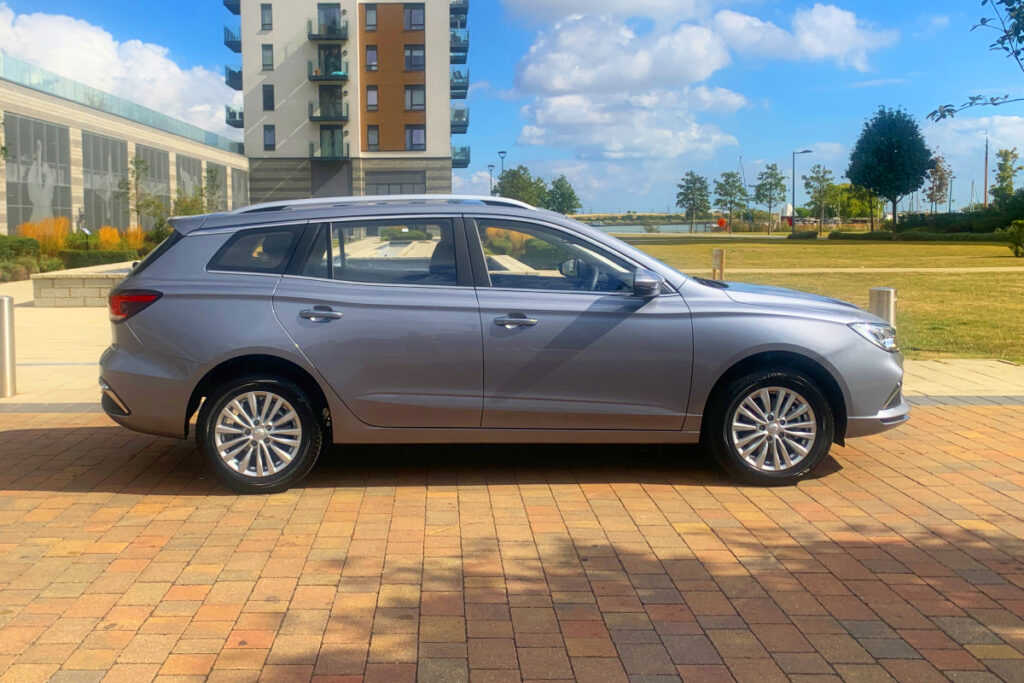
MG5 EV
The MG5 EV has been a popular choice for drivers looking for a practical electric estate, combining useful space with a respectable driving range.
The MG5 EV Long Range was offered with a 61kWh battery and an average range of up to 270 miles. Plus rapid charging to 80% in as little as 40 minutes when using a 150kW charger, is also another advantage of hiring this electric vehicle.
For real-world motorway driving, you should still expect the actual range to be lower than the headline WLTP figure, particularly at higher speeds or in cold weather. However, the combination of useful range, practicality and rapid charging makes the MG5 EV well suited to longer journeys.
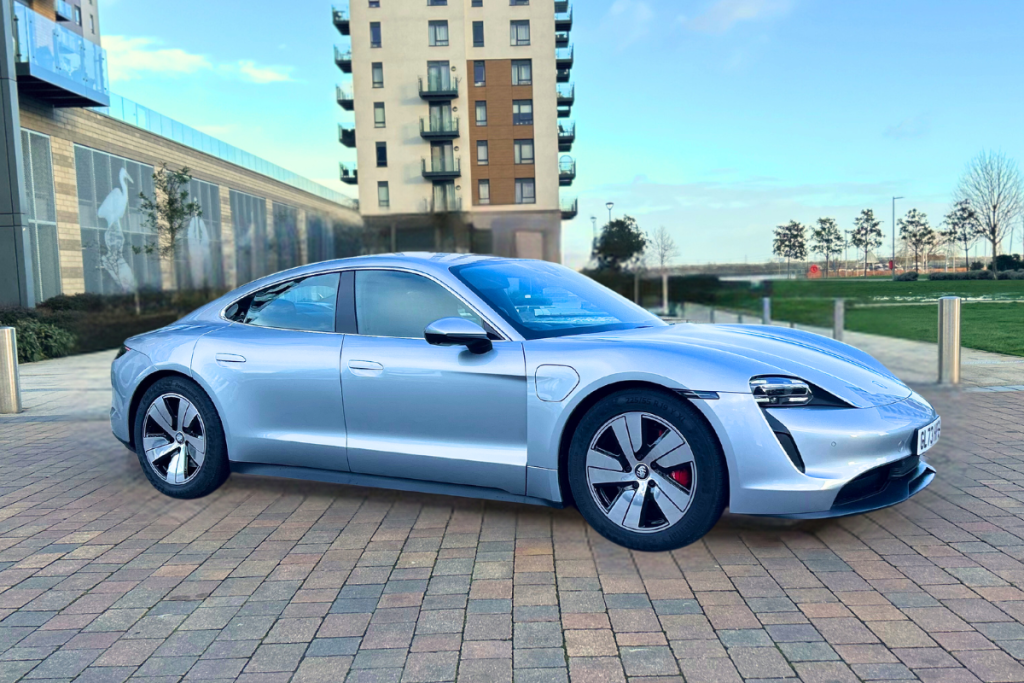
Porsche Taycan
The Porsche Taycan demonstrates just how far electric performance cars have developed.
The current Taycan range on the standard model is capable of 220 miles on average. While the Taycan Long Range is listed at up to 260 miles. Of course, a high-performance EV is capable of using energy quickly if driven enthusiastically. The figures are therefore a useful reminder that driving style can make a substantial difference to EV range.
For motorway journeys, however, the Taycan combines a large battery with strong long-distance credentials and rapid charging technology, making it a compelling option for drivers who spend a lot of time covering serious mileage.
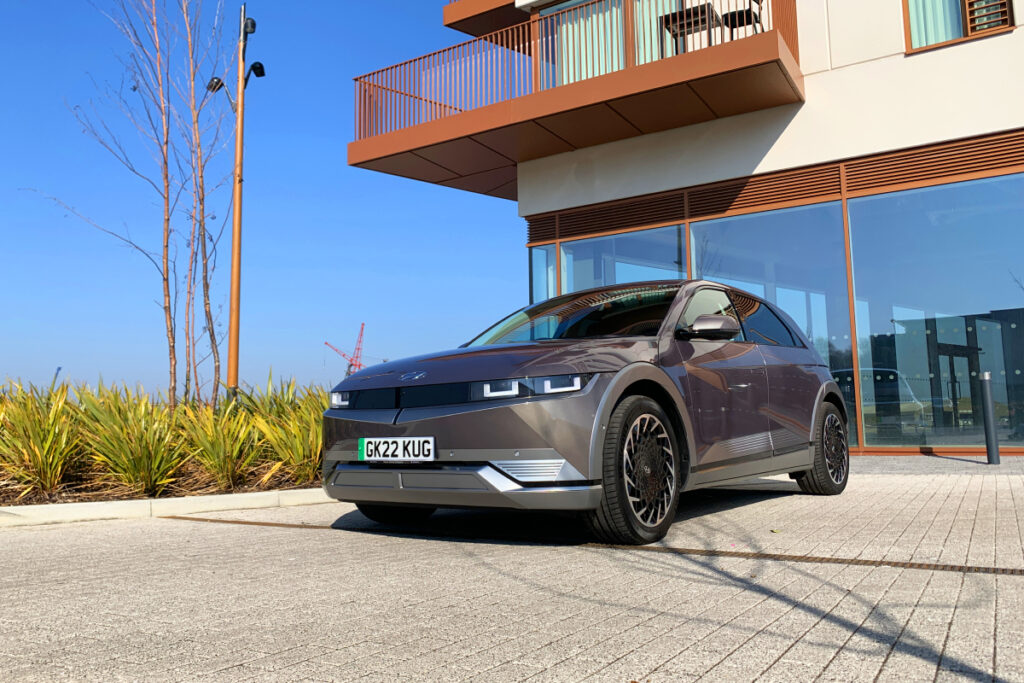
Hyundai Ioniq 5
The Hyundai Ioniq 5 is another EV that has become well known for its combination of range and charging capability.
If you hire a Hyundai Ioniq 5, you can benefit from up to 240 miles of driving range. Which can be particularly useful on motorway journeys. If you do need to stop, the ability to accept high-power charging can help reduce the amount of time spent waiting around, assuming you are using a suitably powerful compatible charger.
Again, the official range figure is based on the WLTP testing procedure and real-world results will vary according to factors including temperature, driving style, climate control and road conditions.
Does Motorway Driving Damage an EV Battery?
No. Normal motorway driving does not inherently damage an EV battery. Electric vehicles are designed to be driven at motorway speeds and to handle long journeys.
Modern EVs also have sophisticated battery management systems that monitor factors such as temperature and state of charge. However, as with any vehicle, sensible driving and following the manufacturer’s charging recommendations are good habits.
For everyday use, you also don’t necessarily need to charge to 100% every night unless you need the additional range. Your vehicle’s handbook will provide the most appropriate guidance for your particular model.
Is it Better to Drive Slower to Save EV range?
If maximum range is your priority, generally speaking, yes. Lower motorway speeds require less energy than higher speeds. However, the objective should not be to make every journey as slow as possible.
Instead, think about driving efficiently rather than driving unnaturally slowly. Maintain a sensible speed, avoid unnecessary acceleration, keep your tyres correctly inflated and plan your charging stops.
A difference of a few miles per hour can be much easier to manage than trying to squeeze every last mile out of the battery.
What Happens if an EV Runs Out of Charge on the Motorway?
This is one of the most common concerns for new EV drivers. The best approach is prevention. Keep an eye on your estimated remaining range, use your vehicle’s route planning features and identify charging options before the battery gets critically low.
If you find that your range is falling faster than expected, don’t wait until the last possible moment. Reduce your speed where safe, turn down non-essential energy consumption and head towards the nearest suitable charging point.
Many EVs will also provide warnings and reduced-power modes as the battery gets very low, but you should not rely on reaching this stage.
Looking to Hire an Electric Vehicle?
If you’re considering making the switch to electric, EVision Electric Vehicles makes electric vehicle hire simple, flexible and convenient. Whether you need an electric car for a day, a weekend away, a business trip or a longer-term rental, our range of quality EVs gives you the opportunity to experience electric driving without the commitment of buying.
From practical electric cars to premium models, EVision offers electric vehicle hire and electric car rental to suit a wide range of needs, including motorway driving. If you’re looking for reliable EV hire in the UK, explore the vehicles available from EVision today and find the right electric car for your next journey.
Don’t forget to follow us on social media to stay up to date with the latest EV news and special offers:
Facebook: https://www.facebook.com/EVisionEVs/
X: https://twitter.com/EVisionEVs
Instagram: https://www.instagram.com/evisionevs
TikTok: https://www.tiktok.com/@evisionelectricvehicles
LinkedIn: https://www.linkedin.com/company/evision-electric-vehicles
All information correct as of: 1st October 2026.
